
Best Kedarnath Temple History and Mythology: Faith, Science, Survival & a Yatri’s Real Experience
Kedarnath is not just a temple; it is a test of faith where science meets the supernatural.
Standing at 11,755 feet amidst the silence of the Himalayas, you begin to understand why the Pandavas chose this exact spot for forgiveness—and why modern engineering is still trying to decode its survival.
Surrounded by glaciers, rivers, and raw mountain forces, this shrine has witnessed centuries of natural upheaval without losing its spiritual core.
This extraordinary journey through time, belief, and resilience is what truly defines the Kedarnath Temple history and mythology.
Located in the Rudraprayag district of Uttarakhand, Kedarnath Temple is one of the 12 Jyotirlingas of Lord Shiva, the most powerful shrine of the Panch Kedar, and a core destination of the Chota Char Dham Yatra.
The Kedarnath temple history and mythology is deeply rooted in the Mahabharata, yet what makes this sacred place truly extraordinary is how its ancient legends are supported by architecture, geography, and modern scientific research.
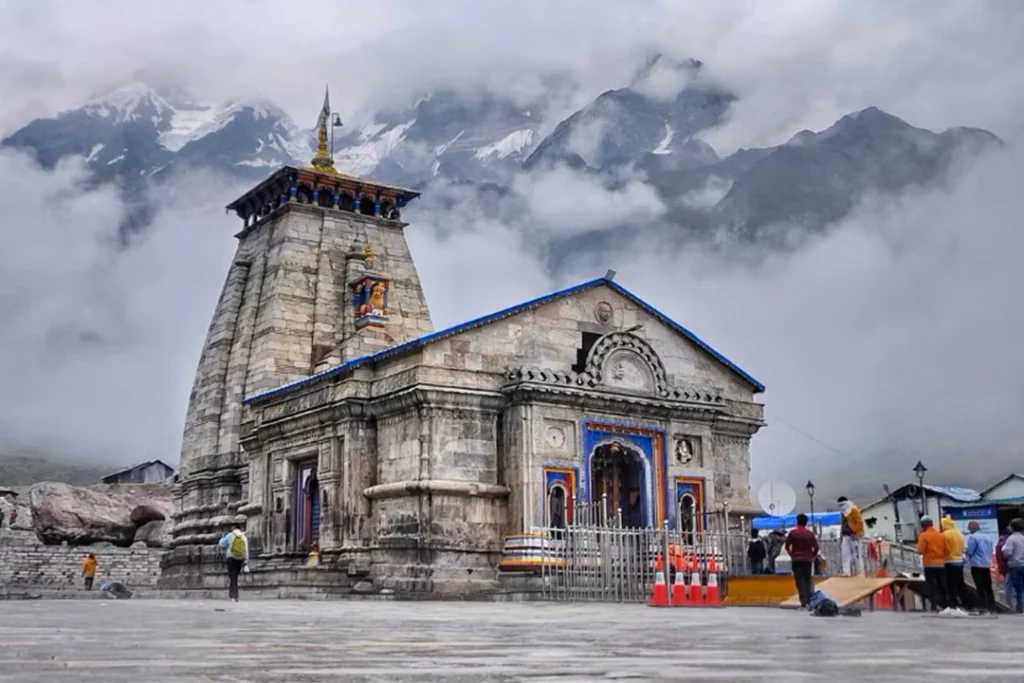
 Kedarnath Temple – Quick Facts
| Feature | Details |
|---|---|
| Kedarnath temple altitude in feet | 11,755 ft (3,583 m) |
| Location | Rudraprayag, Uttarakhand |
| Built by | Pandavas (belief), restored by Adi Shankaracharya |
| Temple height | ~85 feet |
| Architecture | Interlocking stone (no cement) |
| Winter seat | Omkareshwar Temple, Ukhimath |
| Opening decision | On Mahashivratri |
| Closing | Bhai Dooj |
| Major miracle | 2013 flood survival (Bhim Shila) |
Kedarnath Temple History and Mythology: Mahabharata Connection & the Pandavas
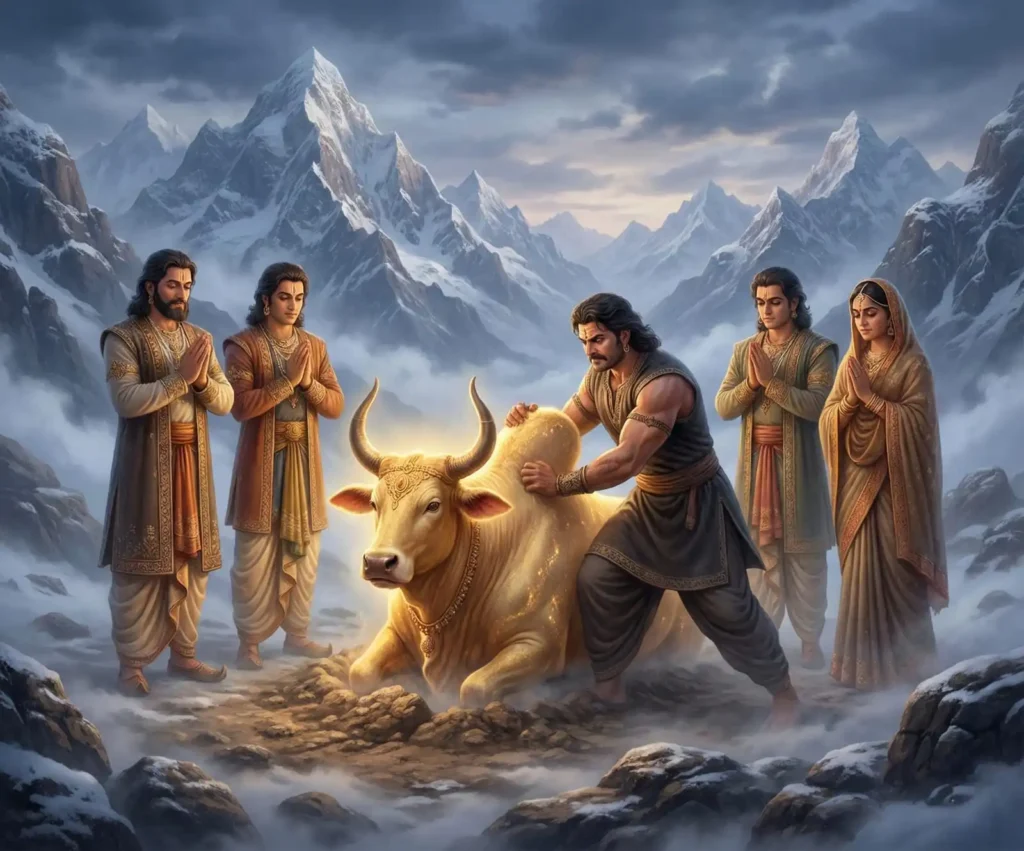
According to legend, after the Kurukshetra war, the Pandavas were burdened with guilt. Victory had come, but peace had not. Seeking forgiveness, they searched for Lord Shiva in the Himalayas.
Lord Shiva avoided them and hid in the form of a bull (Nandi). When Bhima recognized the bull and tried to stop it, Shiva disappeared into the earth. Bhima managed to hold on—but only the hump of the bull remained above ground.
That hump is worshipped today as Lord Kedarnath, forming the very foundation of Kedarnath temple history and mythology.
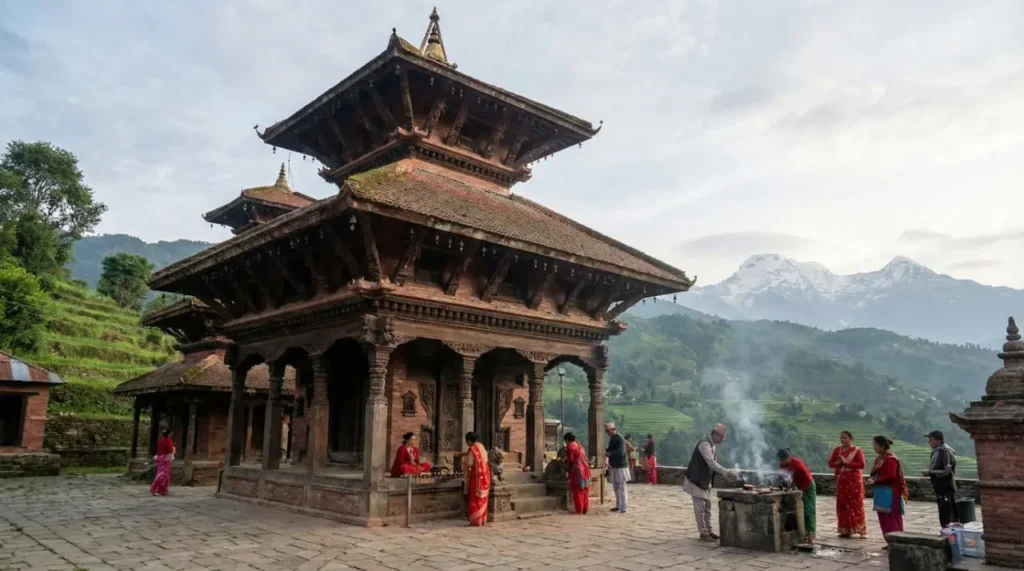
Panch Kedar and the Missing Head: The Nepal Connection
Shiva’s body appeared in five sacred places:
- Kedarnath – Hump
- Tungnath – Arms
- Rudranath – Face
- Madhyamaheshwar – Navel
- Kalpeshwar – Hair
For centuries, one question remained unanswered: Where is the head?
In 2009, the Rawal (head priest) of Kedarnath officially recognized Doleshwar Mahadev Temple in Bhaktapur, Nepal, as the place representing the head of the bull.
Today, many devotees believe their pilgrimage is spiritually complete only after visiting both Kedarnath and Doleshwar Mahadev, creating a rare India–Nepal Shaivite connection.
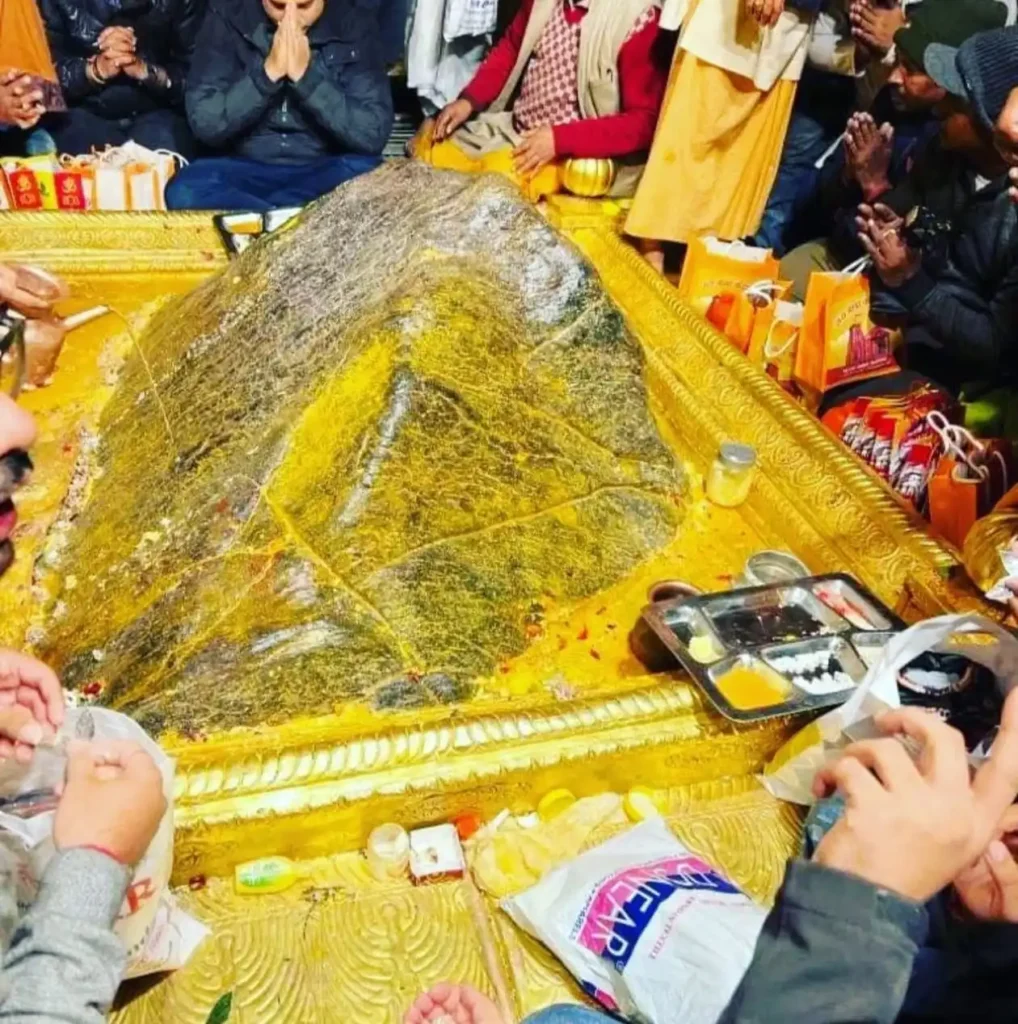
Inside Kedarnath Temple: A Living Symbol of Kedarnath Temple History and Mythology
Unlike most Shiva temples, the Kedarnath Shivalinga is not smooth or cylindrical.
- It is triangular and conical
- Uneven, rock-like in appearance
- Represents the hump of Nandi (Sadashiva form)
Inside the temple hall, pilgrims can see:
- Stone figures of the Pandavas
- Statues of Draupadi and Kunti
- Images of ancient sages
This makes Kedarnath one of the rare temples where mythology is literally carved into stone.
 Did You Know? The Sound of Silence at Kedarnath
Unlike most Hindu temples, there are no hanging bells inside Kedarnath Temple.
Why no bells in Kedarnath?
Because Lord Shiva here is worshipped in the Sadashiva form, which requires absolute meditative silence. The calm you feel inside the temple is intentional, not accidental.
 Retas Kund: A Mystery That Feels Personal
Near the temple lies Retas Kund (Udak Kund).
Locals often ask pilgrims to chant “Om Namah Shivay” or “Bam Bam Bhole.” Many devotees notice bubbles rising from the water, a phenomenon that remains unexplained.
Mythology believes the Pandavas purified themselves here from Brahmahatya. Even today, pilgrims drink this water quietly, believing it eases karmic burden.
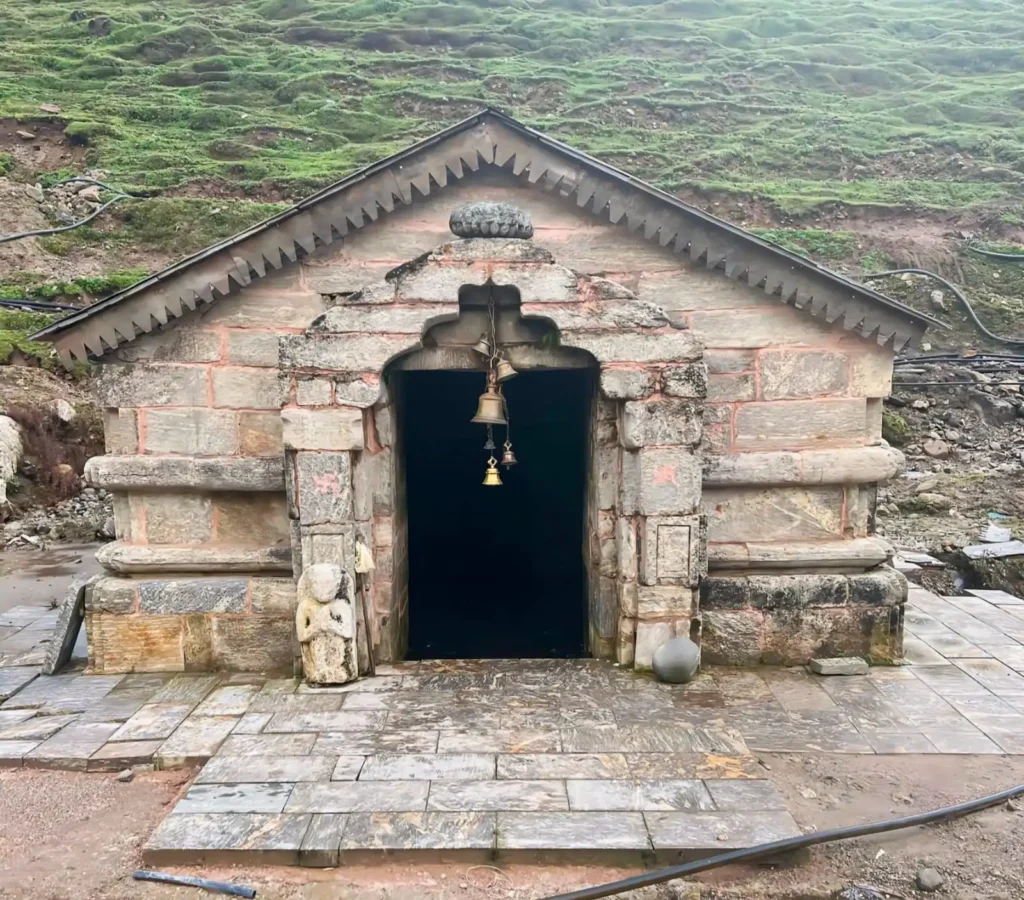
Gaurikund: Where the Kedarnath Temple History and Mythology Journey Begins
Every Kedarnath yatra begins at Gaurikund.
This is where Goddess Parvati meditated to marry Lord Shiva and where Lord Ganesha is believed to have been created.
The 16 km trek from Gaurikund to Kedarnath represents a spiritual journey from Shakti to Shiva, not just a physical climb.
 2013 Kedarnath Flood and the Untold Chapter of Kedarnath Temple History and Mythology
During the 2013 disaster, the Mandakini River surged after a glacial outburst. A massive rock—later called Bhim Shila—stopped just behind the temple.
The floodwater hit this rock and split into two streams, flowing around the temple. Combined with the temple’s elevated base and stone structure, this explains the scientific reason behind Kedarnath flood survival.
Kedarnath Temple History and Mythology Explained Through Architecture & Science
[ADD IMAGE HERE – Interlocking stone construction diagram]
Kedarnath Temple is built using interlocking stone technology (dry masonry):
- No cement or lime
- Precisely cut heavy stone slabs
- Stones lock together and absorb vibrations
This allows the structure to “dance” during earthquakes instead of cracking, making it naturally earthquake-resistant.
 400 Years Under Snow: Little Ice Age Proof
Scientific studies by the Wadia Institute of Himalayan Geology reveal that Kedarnath Temple remained buried under glacial snow for nearly 400 years (1300–1900 AD) during the Little Ice Age.
Yellow lichen lines on the stones show glacier movement—yet the temple stood firm.
Bhairavnath Temple: The Winter Guardian of Kedarnath

Above Kedarnath stands Bhairavnath Temple.
According to belief, Bhairavnath is the Kshetrapal (guardian deity) who protects Kedarnath when the main temple is closed and buried under snow.
Locals say:
“Mandir band hota hai, par Bhairav jaagte rehte hain.”
 A Yatri’s Perspective: What the Guidebooks Don’t Tell You
In my experience guiding groups for Yatrio.in, I’ve seen that faith is strong—but the body has limits. The Kedarnath trek difficulty is often underestimated, especially for senior citizens.
 Kedarnath Oxygen Level & Breathing Problems
At 11,755 feet, the oxygen level drops to about 60% of sea level.
Common experiences:
- Breathlessness even while walking slowly
- Mild headache or dizziness
- Fatigue after short breaks
 Bhairavnath Wind (Hidden Challenge)
Even in May, the ridge near Bhairavnath Temple acts like a wind tunnel. Cold wind combined with low oxygen can trigger breathing discomfort if pilgrims are not dressed warmly.
 Real Advice for Parents (60+)
- Acclimatize: Stay one night in Guptkashi or Sonprayag
- Walk Slow: Focus on rhythm, not speed
- Carry: Portable oxygen & camphor (kapur)
These small steps turn a difficult trek into a peaceful spiritual journey.
 Distance from Gaurikund to Kedarnath
Distance: ~16 km (one way)
Route: Gaurikund → Jungle Chatti → Bheem Bali → Linchauli → Kedarnath
 Daily Rituals & Aarti Timings
| Ritual | Timing |
|---|---|
| Maha Abhishek | 4:00 – 6:00 AM |
| Morning Darshan | 7:00 AM – 3:00 PM |
| Evening Aarti | 6:00 – 7:30 PM |
| Shayan Aarti | 7:30 PM |
 How to Reach Kedarnath (With Costs)
 Helicopter (Best for Seniors)
- Cost: ₹5,500 – ₹8,000 (round trip)
- From: Phata / Sersi / Guptkashi
 Palki / Pony
- Palki: ₹5,000 – ₹7,000 (one way)
- Pony: ₹2,500 – ₹4,000 (one way)
 Train
Train
Nearest stations: Haridwar / Rishikesh
Kedarnath Tour by Road
Haridwar → Rishikesh → Rudraprayag → Guptkashi → Sonprayag → Gaurikund
 Frequently Asked Questions (Only 7)
- Can senior citizens (70+) visit Kedarnath?
Yes, with medical clearance and palki or helicopter services, many seniors complete the yatra safely.
- Can senior citizens (70+) visit Kedarnath?
- Why was Kedarnath Temple not destroyed in the 2013 flood?
Because Bhim Shila diverted the water and the temple’s earthquake-resistant design absorbed the impact.
- Why was Kedarnath Temple not destroyed in the 2013 flood?
- What is special about the Kedarnath Shivalinga?
It is triangular, representing the hump of Nandi, unlike traditional cylindrical lingams.
- What is special about the Kedarnath Shivalinga?
- Is Kedarnath Temple really 1000+ years old?
Yes. The original shrine is believed to be from the Pandava era, restored by Adi Shankaracharya in the 8th century.
- Is Kedarnath Temple really 1000+ years old?
- How difficult is the Kedarnath trek?
The trek is moderate to difficult, mainly due to altitude and low oxygen.
- How difficult is the Kedarnath trek?
- Why are there no bells inside Kedarnath Temple?
To maintain absolute silence for worship in the Sadashiva form.
- Why are there no bells inside Kedarnath Temple?
- Who protects Kedarnath during winter?
Bhairavnath, the guardian deity, is believed to protect the temple.
- Who protects Kedarnath during winter?
Final Thought: Why Kedarnath Leaves an Imprint
Kedarnath does not impress you.
It grounds you.
The Kedarnath temple history and mythology is steady like the Himalayas—where faith meets science and experience becomes belief.
 Planning Kedarnath for Your Parents?
Yatrio specializes in Senior Citizen Chardham & Kedarnath Tour Package, with:
- Palki / Pony / Helicopter support
- Slow-paced itineraries
- On-ground assistance
 Call 8004000875
 Visit Yatrio.in