
Solo vs Group Chardham Yatra: Which One is Right for You ?
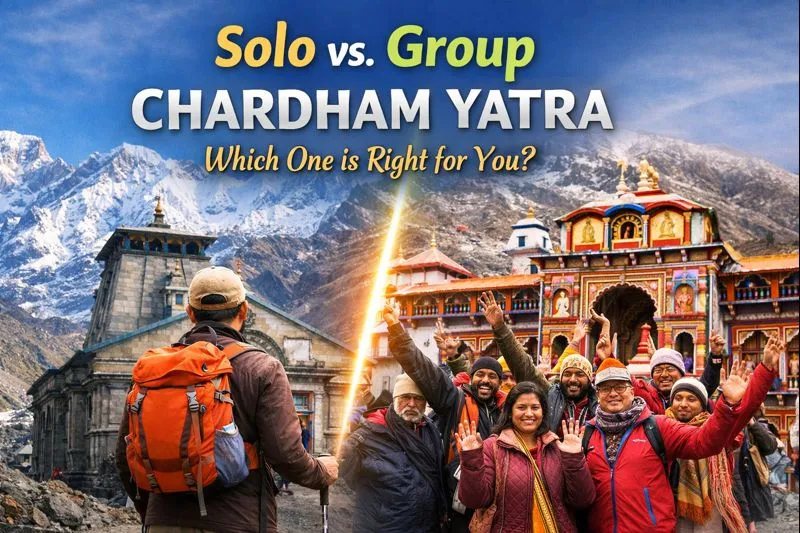
Chardham Yatra is not just another travel plan. It’s a personal milestone.
For some people, it’s a dream they’ve held for years. For others, it’s a promise to their parents—because taking them to Yamunotri, Gangotri, Kedarnath, and Badrinath feels like the most meaningful gift.
Then comes the question that decides your entire experience:
Should you travel solo Chardham Yatra… or join a Chardham group tour?
Solo travel sounds poetic. One backpack. One plan. One brave heart.
But the Himalayas don’t run on poetry. They run on road conditions, altitude, permits, weather shifts, and timing.
So if you’re searching why choose Chardham group tour, this guide gives you a clean, logical, and human answer—without fluff, without fake promises, and without generic SEO talk.
Quick Answer For Solo vs. Group Chardham Yatra
A Chardham group tour is usually a smarter choice than a solo yatra because it offers safer mountain travel support, planned logistics, fixed transport, predictable costs, and smoother coordination for stays and registration. Group tour packages work especially well for first-time pilgrims, families, and senior citizens who want a stress-free Chardham journey.
The Mountain Reality: Why Solo Yatra Feels Different
Chardham yatra is devotional, but it is also physically and logistically demanding.
You deal with:
- long mountain drives almost every day
- unpredictable rain and fog
- landslide-prone stretches during season
- limited hotel options in small towns
- high altitude zones (especially around Kedarnath)
- heavy crowds during peak months like May and June
A solo traveller manages every moving part alone. You plan hotels, arrange transport, track route updates, and handle delays on your own.
A structured Chardham tour package reduces that mental load. It turns the journey into something calm and doable instead of stressful and uncertain.
1) Safety in Devbhoomi: The Himalayas Don’t Care About Confidence
Confidence is great. Preparation is better.
In Uttarakhand, safety doesn’t depend on how brave you feel. It depends on how ready you are for sudden changes.
Weather can shift quickly. Traffic can build up without warning. A small delay can become a long one.
Solo Yatra: Freedom + Full Responsibility
Solo yatra gives you full control. It also gives you full responsibility.
If your taxi breaks down on a remote stretch, you solve it.
If you feel unwell at altitude, you manage it.
If the road closes, you rearrange your plan.
Solo travel can work, but it demands strong planning skills, flexibility, and backup options.
Chardham Group Tour: Safety Comes Built-In
A well-managed Chardham group tour package gives you:
- experienced hill drivers who know route patterns
- fixed transport support (no daily vehicle hunting)
- planned start times to avoid risky late travel
- coordinated stops and smoother movement
- group support that reduces panic during uncertainties
This is the first major reason why people prefer group travel for Chardham in 2026.
2) Cost Logic: Solo Travel Isn’t Always Budget-Friendly
Many people assume solo yatra saves money. In the mountains, solo travel often becomes more expensive.
Why?
Because you pay the full price for everything:
- private taxi charges
- last-minute hotel pricing
- extra buffer days due to delays
- food costs in limited places
- unexpected expenses that don’t show on Day 1
A chardham group tour package spreads major costs across the yatra group. That’s why group travel usually gives better control over budget.
Expected Cost Breakup (Approx.)
Most people searching “Chardham yatra cost” want a clear number before they commit. That’s fair. Planning without a budget is like packing winter jackets for a beach trip. 😄
Here’s a realistic expected cost range for Chardham Yatra , based on common inclusions in group travel.
Estimated Price Range (Per Person) – Solo vs. Group Chardham Yatra
- Standard Chardham Yatra Package : ₹17,500 – ₹20,500 (approx.)
- Standard Chardham Group Package: ₹14,500 – ₹15,500 (approx.)
- Premium / Luxury Options: ₹36,000+ (approx.)
What This Cost Usually Covers
- transport (Tempo Traveller / shared group vehicle)
- hotel stays (basic to standard)
- route planning and coordination
- driver support
- selected meals (depending on plan)
What Changes the Final Price
The exact cost can vary based on:
- travel month (May–June peak vs September–October)
- hotel category and room type
- starting location (Delhi/Haridwar/other)
- meal inclusions
- add-ons like helicopter assistance for Kedarnath
A budget plan still needs smart scheduling. In mountains, money isn’t the only currency—energy is too.
3) Registration & Paperwork: Simple on Paper, Stressful on Ground
In 2026, the biggest challenge isn’t devotion.
It’s coordination.
Most first-time pilgrims struggle with:
- online registration confusion
- ID detail mistakes
- checkpoint verification slips
- timing issues and route planning
When you travel solo, you handle everything yourself. That may sound simple until time gets tight.
With a Chardham group tour, the system stays structured. You don’t keep solving daily problems. You follow a planned schedule.
That organisation makes your yatra smoother and more peaceful.
4) Comfort & Transport: Mountains Don’t Reward “Jugaad”
In Chardham yatra, transport is not just a vehicle.
It becomes your daily energy saver.
You cover long distances across:
- steep roads
- sharp bends
- traffic bottlenecks
- occasional rough patches
A solo traveler often depends on whatever is available—shared taxis, random drivers, or last-minute bookings. That setup might work for one day. Over time, it becomes tiring and unpredictable.
A well-managed Chardham group tour package usually offers better comfort and smoother travel coordination through:
- 12/17 seater luxury Tempo Traveller options
- push-back seats for better sitting comfort
- a fixed driver and planned movement
- defined rest stops for food and washrooms
- predictable pickup and drop timings
This is why group travel improves the overall journey for families, senior citizens, and first-time pilgrims.
5) Estimated Cost Comparison (Solo vs Group Chardham Yatra ) — Reality Check
Solo travel offers flexibility, but Himalayan costs can jump quickly—especially during peak months.
Here’s a practical comparison to help you decide smarter:
| Expense Category | Solo (Private Taxi Style) | Chardham Group Tour (Per Person) |
|---|---|---|
| Transport | High (full vehicle cost) | Lower (shared seat cost) |
| Hotels | Unpredictable in peak season | Pre-booked in bulk |
| Meals | Pay-as-you-go, varies daily | Often included or planned |
| Planning & coordination | Self-managed | Tour-managed |
| Buffer-day cost | Adds extra hotel + taxi | Better planned |
| Stress & time loss | Higher | Lower |
Group travel often becomes the safer option for cost control, planning comfort, and day-to-day predictability.
6) The Yatra Safety Checklist (What a Good Tour Should Provide)
This checklist matters because it protects your yatra from avoidable stress.
A strong group tour system should include:
Medical Backup
At minimum, look for readiness like:
- portable oxygen cylinder support (emergency backup)
- pulse oximeter (quick checks for oxygen levels)
- first-aid medical kit
These tools help in unexpected situations, especially in higher altitude zones.
Verified Drivers (Experienced Hill Drivers)
Hill roads demand skill, discipline, and calm decision-making.
An experienced hill driver knows:
- how to handle fog and rain
- safe braking and controlled speed
- where delays happen regularly
- why late-night travel on hills increases risk
In mountains, a safe driver is more valuable than a fast driver.
Buffer Planning
Weather delays happen. A good plan includes extra margin so the itinerary doesn’t break due to one slow day.
Buffer planning keeps the journey relaxed and better for health.
Elder-Friendly Stay Planning
For senior citizens, small details matter:
- easier access rooms where possible
- stable meal timings
- less walking pressure
- proper rest and sleep schedule
Good planning protects energy, not just time.
Pro Tip from the Field (First-Hand Experience)
Pro Tip from the Field: Based on our 2025 season experience, we recommend keeping at least 2 buffer days in your itinerary because weather in the Phata and Guptkashi region can delay helicopter flights.
This simple strategy prevents last-minute panic and helps travellers avoid rushed decisions.
7) Emergency Protocol: Landslide or Health Issue? Here’s What Happens
In Uttarakhand, delays can happen due to:
- landslides
- heavy rain
- traffic blocks
- sudden health issues
A well-managed Chardham group tour doesn’t “hope” for perfect conditions. It prepares for real-world situations.
Here’s what a professional coordination system typically does:
- stops at a safe zone instead of random roadside waiting
- checks real-time route signals through local driver networks
- supports medical response with first-aid and emergency readiness
- adjusts stays if required so the group remains stable
- uses buffer timing so darshan days don’t collapse due to one delay
This structured support is a big reason why group travel feels safer than solo travel.
8) Typical 10-Day Chardham Group Route (Micro-Itinerary)
A micro-itinerary helps users understand the journey clearly. It also shows planning authority.
Here’s a common 10-day route pattern used in many group tour packages:
Day 1–2: Haridwar to Barkot (Yamunotri Base)
You settle into the journey, adjust to the route rhythm, and prepare for the first dham.
Day 3–4: Barkot to Uttarkashi (Gangotri Darshan)
The yatra deepens. The travel becomes more spiritual and more structured.
Day 5–7: Guptkashi / Sonprayag (Kedarnath Trek + Stay)
This phase feels most demanding. Good planning matters the most here.
Day 8–10: Badrinath Darshan + Return via Joshimath
Badrinath gives closure and a rewarding finish. The return feels smoother with a complete circuit.
A 10-day pace usually works better than rushed plans, especially for families and seniors.
9) Chardham Yatra Registration Made Simple (3-Step Process)
Registration worries first-time pilgrims. It should not.
A clean, practical registration support flow looks like this:
- Document check: basic ID details as required
- Registration support: guidance to keep the process organised
- Travel-ready confirmation: a clear plan so checkpoints feel smooth
This reduces confusion and saves time during the journey.
10) Spiritual Synergy: Group Tour Feels Like a Real Yatra
A Chardham yatra is not only about reaching temples.
It’s about the feeling you carry during the journey.
When you travel solo, you may enjoy silence and independence. That can feel peaceful.
But the Chardham route includes long drives, early mornings, and tiring stretches. Over time, solo travel can also feel lonely—especially when you face delays, fatigue, or uncertainty.
In a Chardham group tour, you often experience:
- bhajans and devotional songs during travel
- shared excitement before darshan
- emotional support during the hardest stretches
- a natural discipline that keeps the route smooth
This is why group travel doesn’t feel like a “tour” to many pilgrims.
It feels like a proper yatra group experience.
Even introverts enjoy it, because the energy stays spiritual and respectful, not chaotic.
11) Solo Independence: Why People Want It (And What They Miss)
Solo yatra attracts people for valid reasons:
- you control your pace
- you stop anywhere
- you change your plan any time
- you travel with full independence
That freedom can feel powerful. For some people, it’s a personal goal.
But Chardham is not a city vacation.
In the mountains, freedom can turn into daily pressure:
- hotel hunting every evening
- negotiating transport every morning
- managing registration slips and checkpoints
- wasting time due to poor timing decisions
- stress when weather or roads change suddenly
This is why many smart travellers choose group tours in 2026.
They don’t reject freedom.
They choose freedom from stress.
A good group tour offers a balanced experience: structure, safety, and still enough space to enjoy the journey.
12) City Planning Guide: Pune, Mumbai, Ahmedabad & Prayagraj
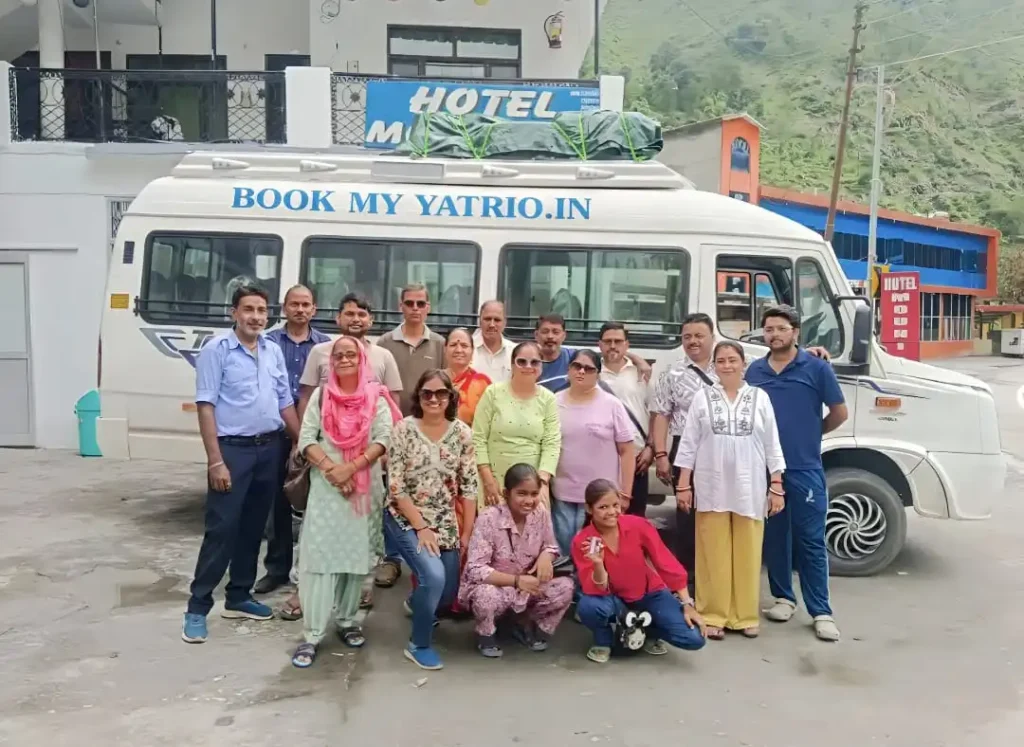
This section matters because real users plan from real cities.
Pune / Mumbai
Many travellers prefer:
- flights to Delhi
- or flights to Dehradun when convenient
- plus onward travel to Haridwar as the base
Once you enter Uttarakhand, a structured plan helps you avoid confusion on daily transport, hotel availability, and timing.
Ahmedabad
Many pilgrims connect through:
- Delhi by flight
- or long-route train options based on season schedules
A group tour becomes easier because you don’t waste time arranging every small piece after reaching the base.
Prayagraj / Lucknow
Travellers often prefer:
- overnight train journeys
- or road connections to the base region
For these travellers, group tours reduce uncertainty because the schedule remains fixed, and the journey becomes smoother after arrival.
This city-based planning is exactly what most generic competitor pages miss. Your content becomes more useful because it acknowledges real travel behaviour.
14) What 2025 Pilgrims Said
What 2025 Pilgrims Said:
“Everything stayed organised and stress-free. Our family completed the yatra comfortably.” — Amit, Pune
“Clean stays and disciplined timing. We felt safe even on long mountain routes.” — Neha, Ahmedabad
“Safe driving, proper stops, and a calm journey overall. The chardham group tour felt like a real yatra, not a rushed trip.” — Rajesh, Lucknow
“Good coordination from start to finish. Even during delays, the team managed everything smoothly.” — Suman, Prayagraj
You can publish two testimonials or all four depending on layout.
15) Why a Well-Managed Group Tour Builds Stronger Trust
travellers don’t just compare prices.
They compare reliability.
Many websites list packages, but they don’t control real execution.
That gap creates disappointment.
A professional tour system builds trust through:
- better coordination and communication
- planned movement across the route
- stable transport discipline
- structured stay planning
- predictable daily routines
This is where a well-managed Chardham group tour package feels different from random travel booking.
You don’t just travel.
You travel with control.
Founder’s Note for Solo vs Group Chardham Yatra
Written by Gyanesh Singh
Founder, Yatrio.in | Uttarakhand Chardham Yatra Specialist
Gyanesh Singh leads on-ground operations for Chardham group tours and has hands-on experience planning safe routes, transport coordination, and stay management across Yamunotri, Gangotri, Kedarnath, and Badrinath for families and senior pilgrims.
Final Conclusion: Choose the Divine, Not Daily Drama
A solo yatra looks adventurous.
But Chardham doesn’t test your courage.
It tests your planning.
If you spend your days:
- searching hotels nightly
- bargaining for taxis
- fixing schedule gaps
- stressing about delays
…you lose the spiritual peace of the yatra.
A structured Chardham group tour gives you the space to focus on devotion.
You rest better, move smarter, and avoid unnecessary chaos.
If your goal is a smoother, safer, and more soulful experience in 2026, a well-managed group tour is often the better choice.
FAQs – Solo vs Group Chardham Yatra
1) Solo vs Group Chardham Yatra: Which is better ?
A Chardham group tour suits most pilgrims because it offers structured planning, fixed transport, and safer coordination on mountain routes. Solo yatra gives freedom, but it demands strong logistics handling and daily decision-making.
2) Is a Chardham group tour safer than solo travel?
Yes, a Chardham group tour is usually safer than solo travel because it includes experienced hill drivers, planned stays, and group support during delays, weather issues, or high-altitude fatigue. You also avoid last-minute transport and hotel risks.
3) What is the price of Chardham Yatra package ?
The Chardham Yatra package price generally falls around ₹17,500–₹20,500 per person (approx.). The final cost depends on travel month, hotel category, meal plan, and transport type. Peak-season dates usually cost more.
4) What is the price of Chardham group tour package ?
The Chardham group tour package price is usually ₹14,500–₹16,500 per person (approx.). Group travel stays budget-friendly because transport and basic planning costs get shared. Prices can change with season and inclusions.
5) Why does solo Chardham yatra become expensive during peak season?
Solo Chardham yatra often becomes expensive in peak season because private taxis charge more, hotels sell out quickly, and last-minute bookings increase prices. Weather delays can also add extra stay nights. Group tour packages usually keep costs more controlled.
6) What is the best starting point for a Chardham tour package?
Haridwar is one of the best starting points for a Chardham tour package because it offers easy rail and road connectivity and helps maintain a smoother route plan. It also supports better acclimatization before entering higher altitude regions.
7) How many days are ideal for Chardham Yatra ?
A 10-day Chardham yatra itinerary is ideal because it gives better pacing, proper rest, and buffer time for weather or road delays. Shorter 7-day plans feel rushed, especially for senior citizens and families.
8) Is Chardham Yatra safe for senior citizens?
Yes, Chardham Yatra can be safe for senior citizens if they choose a planned group tour with comfortable transport, disciplined timing, and regular breaks. Seniors should avoid rushed itineraries, carry essential medicines, and maintain hydration, especially near Kedarnath altitude zones.
9) Can Kedarnath helicopter flights get delayed due to weather?
Yes, Kedarnath helicopter flights can get delayed or rescheduled due to sudden weather changes, especially around Phata and Guptkashi. Based on our 2025 season experience, keeping at least two buffer days helps avoid stress and itinerary disruption.
10) What documents are required for Chardham Yatra 2026?
For Chardham Yatra 2026, carry Aadhaar card or valid government ID, your yatra registration slip, and an active mobile number for OTP verification. Also keep emergency contacts and basic medicines. These small essentials prevent delays at checkpoints and during travel.